Gingerbread that holds a sharp edge
- Easy
Gingerbread biscuits
350 g plain flour, 1 tsp bicarbonate of soda, 2 tsp ground ginger, 1 tsp ground cinnamon, 125 g unsalted butter, 175 g light muscovado sugar, 1 large egg (about 50 g), 4 tbsp golden syrup (about 80 g).
- Oven
- 180°C · 160°C fan · gas 4
- Time
- 10–12 min
- Yield
- 24 at 8 cm
Melt the butter, sugar and syrup together over a low heat until the sugar has dissolved, then let the pan stand for 5 minutes. Pour it onto the sifted flour, bicarbonate and spices, add the beaten egg and stir until no dry flour shows. Knead for no more than 30 seconds. More handling makes the biscuits tough.
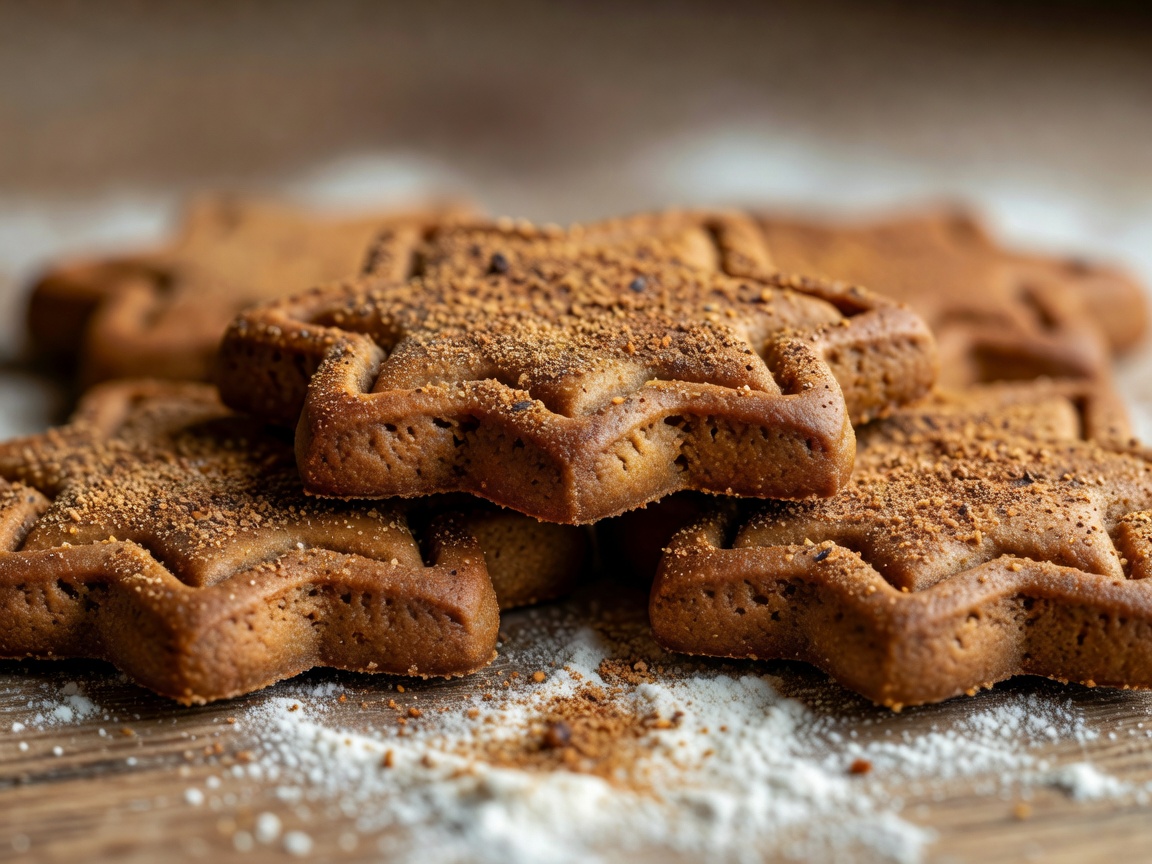
The dough is soft while warm. Roll it straight away between two sheets of baking paper to 5 mm, slide the sheet onto a tray and chill for 30 minutes. Cut while cold and the shapes keep their corners. Bake until the edges darken a shade; the centres firm up as they cool on the tray for 5 minutes.
For gingerbread house panels, roll to 6 mm, bake for 14 minutes and trim the panels against a paper template while they are still hot. Cold gingerbread snaps instead of cutting.
Royal icing. Beat 1 egg white (about 30 g) with 250 g sifted icing sugar and ½ tsp lemon juice for 5 minutes, to stiff peaks. That is piping consistency. For flooding, loosen a portion with water a quarter teaspoon at a time until a line drawn through it disappears in about 10 seconds. If you prefer not to use raw egg white, 2 tsp meringue powder with 30 ml water does the same job.
Shortbread at 160°C, not hotter
- Easy
Butter shortbread
300 g plain flour, 200 g unsalted butter at about 18°C, 100 g caster sugar, a pinch of fine salt, extra caster sugar to finish.
- Oven
- 160°C · 140°C fan · gas 3
- Time
- 40–45 min
- Yield
- 2 × 20 cm, 16 wedges
Scottish shortbread is a ratio, not a recipe: three parts flour, two parts butter, one part sugar, by weight. Swapping 50 g of the flour for rice flour gives the sandy bite you find in Edinburgh bakeries. Cornflour does the same at a pinch.
Beat the butter and sugar only until combined, a minute at most. Add the flour and salt and stop as soon as the mixture clumps. Press it into two 20 cm tins, prick all over with a fork and mark eight wedges in each. Chill for 15 minutes.
Bake until the edges are pale gold and the centre is still pale. Shortbread browned all over tastes of toasted flour rather than butter. Sprinkle with caster sugar the moment it leaves the oven, recut the wedge lines while it is warm, and leave it in the tin for 20 minutes before lifting it out.
Spritz through a press or a star nozzle
- Medium
Spritz biscuits
225 g unsalted butter at 20°C, 100 g caster sugar, 1 egg yolk, 1 tsp vanilla extract, 280 g plain flour, ¼ tsp fine salt.
- Oven
- 190°C · 170°C fan · gas 5
- Time
- 8–10 min
- Yield
- About 40
German Spritzgebäck and Scandinavian spritz both depend on butter temperature. At 20°C a finger leaves a dent without smearing. Colder and the dough will not pass through a press; warmer and the ridges melt flat in the oven.
Pipe or press onto a cold, unlined and ungreased tray. A cookie press needs bare metal for the dough to grip as you lift. Bake until the edges just colour, then cool on the tray for 2 minutes. Dip the ends in 100 g melted dark chocolate if you like.
Storage and timing
| Biscuit | Keeps | Notes |
|---|---|---|
| Gingerbread, plain | 2 weeks | Airtight tin, layers separated with baking paper |
| Gingerbread, iced | 1 week | Let icing dry 8 hours before stacking |
| Shortbread | 1 week | Keep away from soft biscuits |
| Spritz | 1 week | Chocolate-dipped: store below 18°C |
Never store crisp and soft biscuits in the same tin. Moisture moves from the soft ones into the crisp ones within a day, and both end up chewy.