Why enriched dough takes longer
Sugar draws water away from yeast, and fat coats the strands of gluten so they form more slowly. A dough with 20% sugar and 30% butter against the flour weight can take twice as long to double as a plain bread dough. Two habits fix most problems. Use strong bread flour with 12–13% protein, and measure the dough temperature after kneading. Aim for 24–26°C; adjust next time with warmer or cooler milk.
Add butter only after the gluten has developed. Knead the dough until you can stretch a small piece thin enough to see light through it without tearing, the window-pane test, then beat in soft butter a spoonful at a time.
Home panettone with an overnight biga
- Hard
Home panettone
Biga: 100 g strong flour, 60 ml water, 1 g yeast. Dough: 400 g strong flour, 7 g fast-action yeast, 120 g caster sugar, 5 egg yolks plus 1 whole egg, 100 ml warm milk, 150 g soft unsalted butter, 1 tsp salt, zest of 1 orange and 1 lemon, 1 tsp vanilla, 200 g sultanas and chopped candied peel.
- Oven
- 170°C · 150°C fan · gas 3
- Time
- 45–50 min
- Yield
- 1 × 1 kg paper mould
Milanese bakeries build panettone on lievito madre, a stiff sourdough refreshed over several days. At home, a 12–16 hour biga gives some of that depth. Mix it the evening before and leave it covered at room temperature.
Next day, combine the biga with flour, yeast, sugar, eggs and milk, and knead for 12–15 minutes in a stand mixer until it passes the window-pane test. Add the butter in four stages, then the salt, zest and vanilla. Fold in the fruit by hand. Shape a tight ball, drop it into the paper mould and leave it until the dome is 2 cm below the rim. This usually takes 4–6 hours.
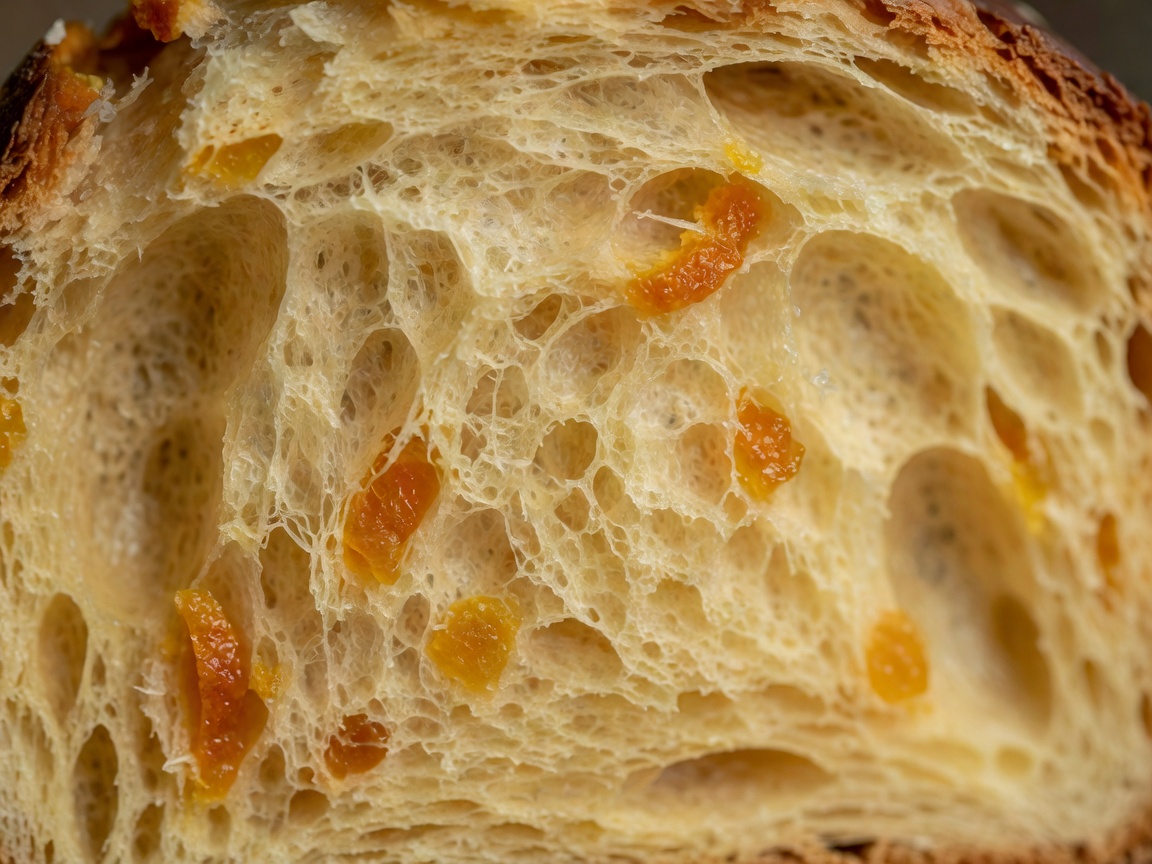
Cut a cross in the top, place a cube of butter in the centre and bake on a low shelf. The panettone is done when a probe reads 92–94°C in the middle. Cover the top with foil if it darkens after 30 minutes. Immediately push two long skewers through the base of the paper and hang the loaf upside down between two chairs for 4 hours. Upright, the soft crumb collapses under its own weight.
Saffron lussekatter for 13 December
- Medium
Saffron lussekatter
0.5 g saffron, 250 ml whole milk, 75 g butter, 80 g caster sugar, 7 g fast-action yeast, 500 g strong flour, 100 g quark or thick yoghurt, ½ tsp salt, 1 egg, raisins to decorate, 1 beaten egg to glaze.
- Oven
- 200°C · 180°C fan · gas 6
- Time
- 10–12 min
- Yield
- 24 buns
In Sweden these golden buns are eaten on St Lucia's Day, 13 December. Grind the saffron with a pinch of sugar, then warm it with the milk and butter to 37°C. Mix with the rest, knead for 8 minutes and rise for 1 hour. Divide into 24 pieces of about 45 g, roll each into a 20 cm rope and curl both ends in opposite directions to make an S. Press a raisin into each curl, prove for 30 minutes, glaze and bake.
Cardamom cinnamon buns that freeze well
- Medium
Cardamom cinnamon buns
Dough: 500 g strong flour, 7 g yeast, 60 g sugar, 2 tsp ground cardamom, 250 ml warm milk, 75 g butter, 1 egg, ½ tsp salt. Filling: 100 g soft butter, 80 g light brown sugar, 2 tbsp ground cinnamon.
- Oven
- 200°C · 180°C fan · gas 6
- Time
- 12–15 min
- Yield
- 16 buns
Roll the risen dough to 40 × 30 cm, spread the filling to the edges and roll up from the long side. Cut into 16 slices of 2.5 cm. To freeze, set the buns in paper cases on a tray and freeze before the second rise, then bag them. Thaw overnight in the fridge and prove for 60–90 minutes at room temperature before baking.
| Dough | First rise | Second rise | Done at |
|---|---|---|---|
| Panettone | Overnight biga | 4–6 h | 92–94°C |
| Lussekatter | 1 h | 30 min | 90°C |
| Cinnamon buns | 1 h | 45 min | 90°C |
| Stollen | 1–1½ h | 45 min | 90°C |